

What If I Reduce My Federal Withholding And Then Use That Money To Increase My 401 K Contribution
Should You lot Make Afterward-Tax Contributions to Your 401(k)?
Afterward-taxation 401(m) contributions are a wise option for some people.

Traditional 401(k)s use pre-tax dollars -- that is, your contributions reduce your taxable income for the year and yous pay taxes on your withdrawals after. Roth 401(k)s work the opposite mode: You pay taxes on your contributions in substitution for later revenue enhancement-free withdrawals. But in that location's a third, bottom-known type of 401(k) contribution you may be eligible to make, known as an afterwards-revenue enhancement contribution.
After-tax 401(k) contributions blend the features of traditional and Roth 401(k)south, enabling you to salve a lot more for retirement every yr. Let's wait at how after-tax 401(k) contributions work and how to know if they're a smart motility for you.

Paradigm source: Getty Images.
How after-tax 401(k) contributions work
After-tax 401(1000) contributions are known as "after-tax" because you owe income taxes on these contributions in the year y'all make them, just every bit with Roth 401(k) contributions. Still, your earnings on subsequently-revenue enhancement contributions grow tax-deferred, like traditional 401(m) funds. When you lot withdraw the money in retirement or whenever you demand the extra cash, you will owe taxes only on your earnings, non your contributions. This is true no thing your age or why you're withdrawing the funds.
If y'all cull, you can catechumen your later on-tax 401(k) funds to a Roth IRA later on on, bold your plan allows this. You won't owe taxes on the converted corporeality because you already paid taxes the year you contributed the coin, but future earnings volition grow tax-free.
Non all plans permit afterward-tax 401(k) contributions, so it's important to cheque with your employer earlier exceeding the annual contribution limit.
When after-revenue enhancement contributions are a skillful idea
Here are a few scenarios when making afterwards-tax 401(k) contributions might make sense:
- You're a loftier earner: High earners who max out their tax-deferred 401(1000) contributions tin employ after-taxation contributions to gear up aside more than coin for retirement.
- You want to increase your emergency savings: You tin withdraw after-tax 401(k) contributions at whatever time without paying taxes or penalties, so it's a great option for keeping extra emergency savings. Yet, it's good practice to limit how often you take money out of your 401(k), equally this hampers the growth of your savings.
- Your income is volatile: After-tax 401(yard) contributions brand sense if your income varies significantly from 1 year to the next. In your college-earning years, after-taxation 401(k) contributions enable you lot to contribute more money to your 401(one thousand), and if you need some extra cash in a lower-earning yr, you can describe upon your afterward-taxation contributions without worrying nigh penalties and taxes.
Pros and cons of after-tax contributions
As with all types of 401(yard) contributions, after-taxation contributions take their pros and cons.
Pros of after-taxation 401(k) contributions
The master advantage of after-tax 401(k) contributions is that yous can contribute beyond the standard contribution limits every year. In 2021, you are immune to defer only up to $nineteen,500 (or $26,000 for those 50 or older) in salary to a traditional or Roth 401(k) for full tax benefits. Those amounts increase in 2022 to $20,500 and $27,000, respectively.
However, the IRS allows you to contribute upwardly to a full of $58,000 (or $64,500 for those fifty or older) for 2021, or $61,000 (or $67,500 for those 50 or older). This includes bacon-deferred contributions into your traditional and Roth 401(k), whatsoever employer match contributions, and whatsoever subsequently-revenue enhancement contributions.
After-tax contributions are likewise a dandy option for those who need to withdraw funds before 59 1/two and don't have a Roth retirement account. Traditional 401(k) withdrawals require you to pay taxes plus a 10% early withdrawal penalty for doing this. If you withdraw only your afterwards-tax contributions, you won't take to worry nearly those extra costs. Still, after-tax 401(one thousand) earnings are still field of study to the usual taxes and penalties.
Cons of subsequently-revenue enhancement 401(k) contributions
Your programme may not let after-tax 401(k) contributions. Always check with your visitor whether this is an option earlier exceeding the annual 401(k) contribution limit.
The biggest downside to these contributions is that y'all still owe taxes on your earnings, fifty-fifty though you don't take to pay them correct away. You tin minimize your taxable earnings past rolling the funds over into a Roth 401(k) or a Roth IRA, merely not all plans permit electric current employees to practice this.
After-tax 401(k) contributions can brand sense for certain people, but it's important to beginning make sure y'all're eligible and so weigh all other options before doing so. If you take admission to an IRA, for example, you may prefer to stash extra savings at that place first so you tin reap the tax advantages these accounts offer before putting extra money into your 401(k).
Motley Fool Returns
Stock Advisor S&P 500
357% 123%
Join Stock Advisor
Discounted offers are but available to new members. Stock Counselor will renew at the then electric current list price. Stock Counselor list price is $199 per twelvemonth.
Stock Advisor launched in Feb of 2002. Returns as of 06/02/2022.
Cumulative Growth of a $10,000 Investment in Stock Advisor Calculated by Time-Weighted Return 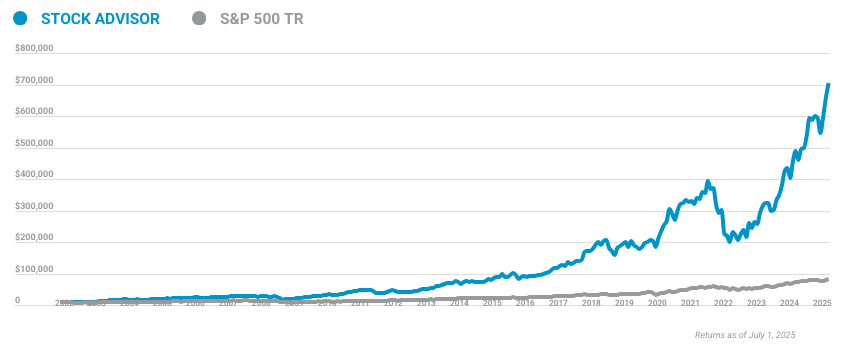
Retirement Planning
- The Nuts of Retirement
- How much practise I need to retire?
- 401k Essentials
- How do I compare?
- Social Security 101
- Retirement and Coronavirus
In Retirement
- How to Retire?
- What to Sell in Retirement?
- Estate Planning
Investing Tools
- Compare Stock Brokers
- Compare IRA Accounts
- Fiscal Calculators
Source: https://www.fool.com/retirement/plans/401k/after-tax/
Posted by: carpenterficholl90.blogspot.com
0 Response to "What If I Reduce My Federal Withholding And Then Use That Money To Increase My 401 K Contribution"
Post a Comment